Clothify
On this page
- The three places to sell clothing online
- What each option costs on one order
- Seven things a store needs before it opens
- Write product pages that answer the size question
- Set delivery expectations before checkout
- Send your first shoppers to one page
- Where Clothify fits
- Questions about selling clothing online
To sell clothing online, choose where your first customers are likely to buy: your own store, a marketplace or a social shop. An independent store gives you more control over branding and customer contact; a marketplace can be useful when you do not yet have an audience. This guide compares fees checked on November 12, 2026 and the work needed before a first sale.
- 3 placesown store, marketplace, social shop
- $2.33card and Clothify fees on a $32 tee order
- $3.94Etsy fees on the same order
The three places to sell clothing online
| Your own store | A marketplace | A social shop | |
|---|---|---|---|
| Who brings shoppers | You do | The marketplace's search | Your posts and the app's feed |
| Fees | Card fee, platform charges and a monthly plan | A fee on every listing and sale | Set by each app |
| Customer contact | Yours | Limited by the marketplace | Limited by the app |
| Brand control | Full | A listing beside competitors | A product tag in a feed |
| Best for | Building a brand | Being found by search | Audiences that buy in the app |
A brand is the reason someone comes back. That is hard to build on a page you do not control, so treat marketplaces and social shops as extra doors, not the house.
What each option costs on one order
Take one $32 T-shirt with $4.75 standard shipping paid by the customer, an order total of $36.75.
Selling fees on one $32 T-shirt order
| Item | Fees |
|---|---|
| Your own store, card fee only (2.9% plus 30 cents on $36.75) | $1.37 |
| Clothify, card and platform fees (Card fee plus 3% of the $32 merchandise price) | $2.33 |
| Etsy listing, transaction and payment fees (20 cents, 6.5% and 3% plus 25 cents) | $3.94 |
The card-only example uses Stripe's US domestic-card rate of 2.9% plus 30 cents. Clothify also charges 3% on merchandise, adding $0.96 here for a $2.33 total. Other store providers have their own platform charges. Etsy's fee policy lists a 20 cent listing fee and a 6.5% transaction fee on the item and shipping; its US payment processing fee is 3% plus 25 cents. Offsite Ads can add 12% or 15%. International cards, currency conversion, tax-related charges and optional services are outside this example.
Your own store also has a monthly cost:
| Store software | Monthly price | Includes |
|---|---|---|
| Clothify Starter | $19.99 | Design studio, store builder and launch content |
| Shopify Basic | $39, or $29 a month billed yearly | Store builder and checkout |
Shopify's prices are from its pricing page. The two tools are not the same thing: Shopify is a general store platform with a large app market, and Clothify is built only for clothing brands. See Clothify and Shopify compared and Clothify and Etsy compared before choosing.
Using the same dated $11.92 production cost, the example leaves $17.75 through Clothify or $16.14 through Etsy before monthly plans, ads, returns and taxes. The difference is $1.61 per sale. Compare total costs at your expected order volume, not just one fee.
Seven things a store needs before it opens
Finished pieces
Sampled and worn, not only mockups
Real photos
On a person and close up on the print
Product pages
Price, sizes, a size chart, fabric and care
Policies
Shipping, returns, privacy and terms
Payments
A connected payment account and a test order
A domain
The same name as your social handles
A launch plan
A date, three posts and the people you will tell
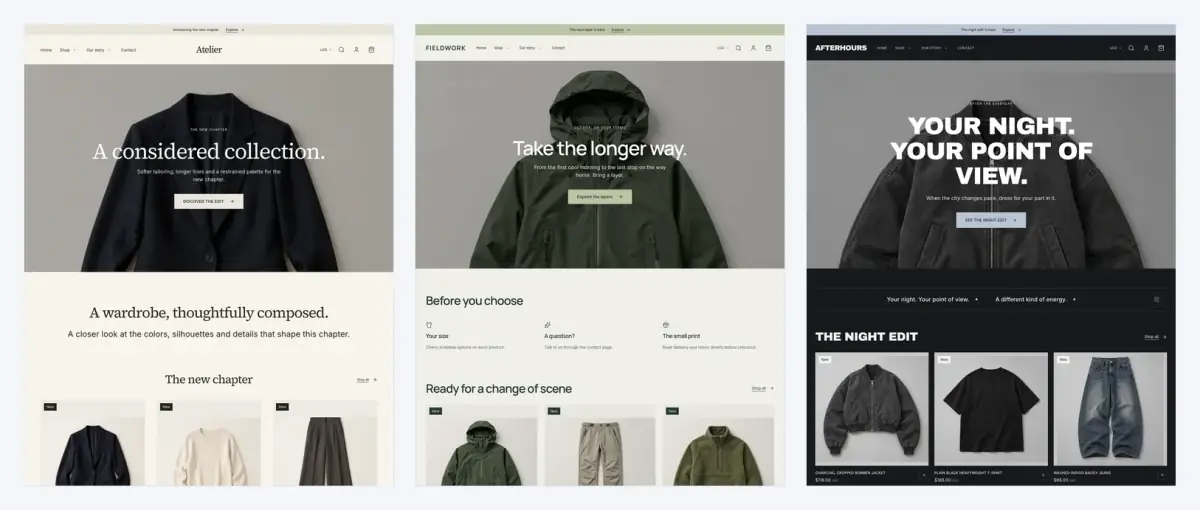
Write product pages that answer the size question
Shoppers cannot try your pieces on, so answer the fit question on the page.
Show the fit
Say what size the person in the photo wears
Add a size chart
Chest width and body length for every size
Name the blank
Fabric weight and material
Show both sides
Front, back and the print up close
A good size chart also helps prevent returns. What to promise in a clothing return policy explains why that matters more with print on demand.
Set delivery expectations before checkout
Print on demand pieces are made after the order. Printful's shipping page lists average production of 2 to 5 business days plus 3 to 4 for standard US shipping. Show a delivery estimate for your actual product and destination near the buy button, and the shipping cost before payment. Allow time for delays; averages are not guarantees.
Send your first shoppers to one page
Launch to people who already know you, and give them one link.
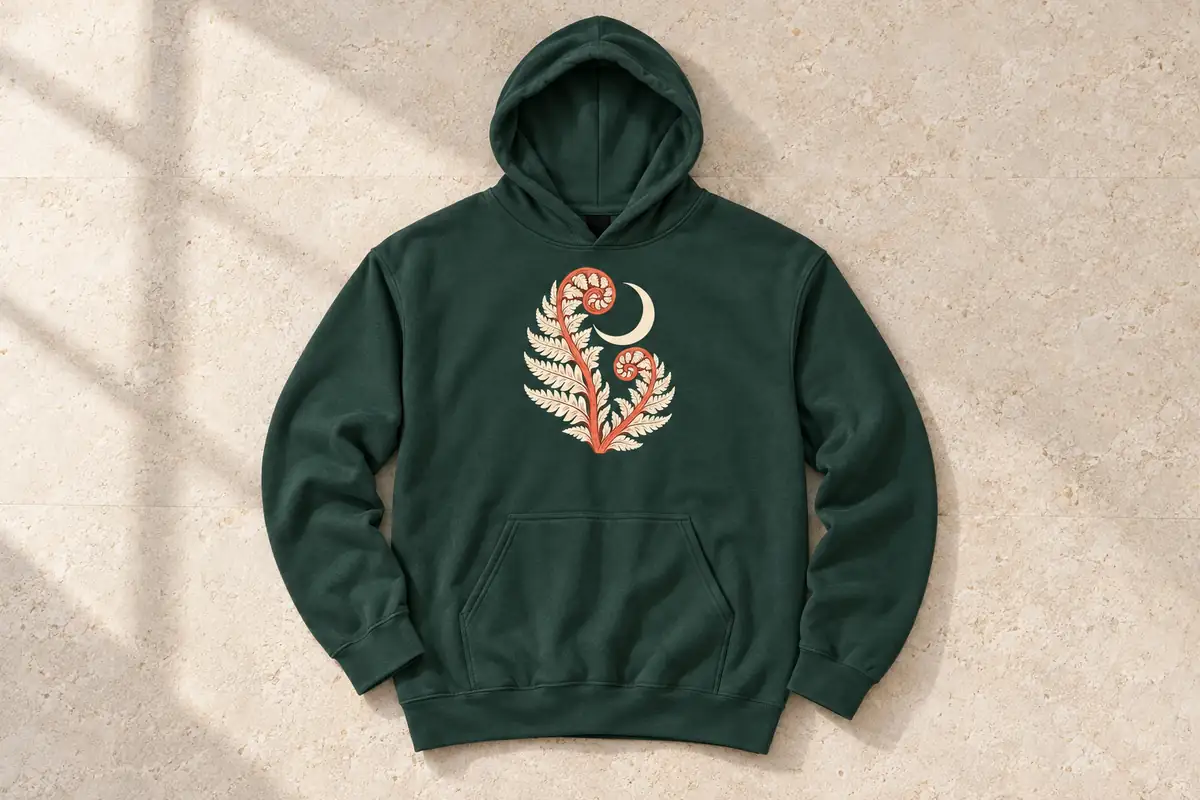


Post the piece on a person, the print up close and the date. Put the store link in your bio and in every reply. Price the launch with how to price clothing so a discount never costs more than it earns.
Where Clothify fits
Clothify builds the first option: your own hosted store, with product pages from your pieces, default shipping and returns pages you can edit, and payments through Stripe. It does not list your products on Etsy or in social shops, and it does not post for you. It prepares photos and captions to download. The store builder page shows what is included.
Questions about selling clothing online
Can I sell clothing online without inventory?
Yes. With print on demand each piece is made after it is ordered and shipped to the customer. The 7-day print on demand plan shows the steps.
Should I start on Etsy or my own website?
Start with your own store if you are building a brand and already have people to tell. Add Etsy if shoppers search there for what you make, and price for its fees.
Do I need a business license to sell clothing online?
It depends on where you live and sell. Check your state or national small business site before your first sale, and ask an accountant about sales tax.
How do I get my first sale?
Tell the people the brand is for, in person and in the groups you already share. People who know you are the easiest first customers.
Start your clothing store.
Sources
- Fees and Payments Policy, Etsy. Checked Nov 12, 2026.
- Payment processing fees, Etsy. Checked Nov 12, 2026.
- Pricing, Shopify. Checked Nov 12, 2026.
- Pricing and fees, Stripe. Checked Nov 12, 2026.
- Shipping and fulfillment times, Printful. Checked Nov 12, 2026.